
This article covers the same ground as the video below — smart load centers, solar panel selection, battery storage, micro inverters, smart outlets, and lighting strategy. This is Part 3 of an 8-part series.
Load center: start with capacity
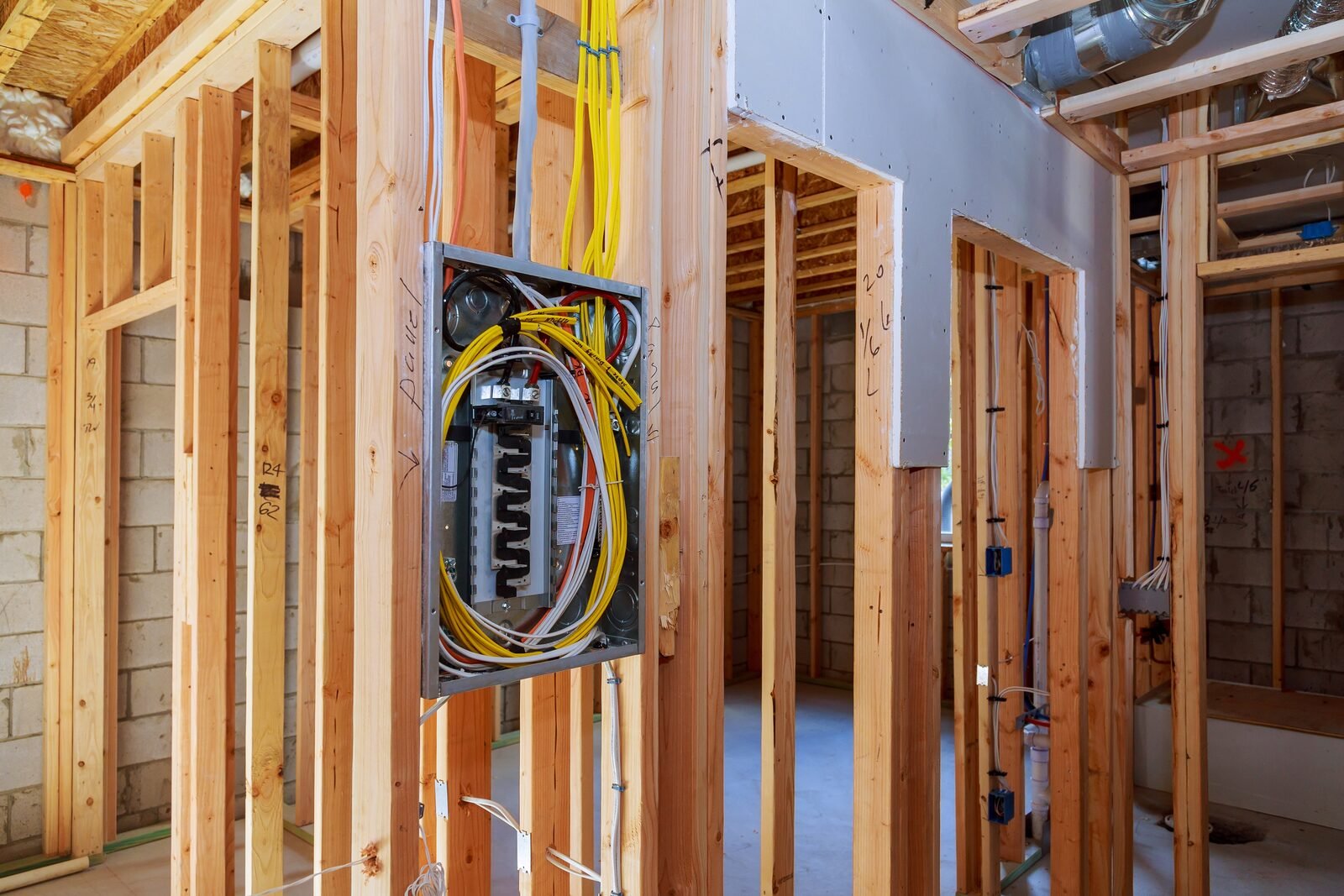
Every electrical decision downstream of the load center depends on having sufficient capacity. Older homes often have 100, 125, or 150-amp panels. Modern homes typically install 200-amp service. For a smart home with significant electrical load — geothermal heat pump, EV charging, high-powered appliances, and a full device ecosystem — 200 amps is the minimum starting point.
The Span Smart Panel goes considerably further. It provides 32 remotely controllable circuits with per-circuit monitoring and detailed energy analytics. When integrated with solar and battery backup, the Span panel manages power routing automatically — deciding which circuits draw from solar, which draw from battery, and which pull from the grid based on your configuration. Its most compelling feature for a backup scenario is virtual critical load panels: you designate which circuits must stay on during a power outage, and the panel extends battery life by up to 40% by shutting down non-essential loads automatically. The cost is significant, so it makes most sense when solar and battery backup are already part of the plan — which they are here.
Solar panels
For the primary array, high-efficiency panels in the 490-watt range (approximately 22.65% efficiency) are worth considering when space is available. Ground-mounted panels on a large lot can be oriented for maximum sun exposure year-round, avoiding the shading and orientation constraints of roof-mounted systems.
In northern climates with heavy winter snowfall and limited winter sun, bifacial panels are worth a look. A bifacial 440-watt panel produces slightly less peak output than a standard 490-watt panel, but it captures reflected light from snow on the ground — providing meaningful additional generation during the darkest months when a standard panel would be partially obscured or receiving oblique low-angle sunlight.
Battery storage and micro inverters
Solar alone doesn't solve the power continuity problem — panels generate nothing at night and very little in bad weather. Battery storage fills the gap. The Enphase 10 kWh fourth-generation battery offers 7.08 kW of continuous output and integrates well with the Span panel for intelligent load management. It's not the cheapest option, but the ecosystem reliability justifies the cost for a system you're depending on.
Micro inverters convert DC from individual solar panels into AC for household use. The Enphase IQ8 micro inverters optimize performance at the panel level — if one panel underperforms due to shading, debris, or failure, only that panel is affected. A single string inverter failure, by contrast, takes the entire array offline. For a system designed for reliability, per-panel micro inverters are the right architecture.
Smart outlets throughout
Most smart home setups bolt smart plugs onto existing dumb outlets. In a ground-up build, the outlets themselves can be smart from day one. The Eve Energy Outlet replaces a standard duplex receptacle, providing per-outlet on/off control, scheduling, and energy monitoring built directly into the wall. Since it's permanently wired to the mains, it acts as a full Thread router — strengthening the Thread mesh network — rather than a Thread end device. Every device plugged in becomes effectively smart without requiring any intelligence of its own.
Switches and lighting
For lighting control, the recommendation is to keep the switches dumb and make the lights smart. Smart switches require the light fixture to stay powered at all times, which conflicts with some dimming and color control implementations. Smart lights — like the Govee ecosystem — handle color, brightness, and effect directly and support Matter for straightforward integration. Recessed lighting works well for common areas; accent lighting highlights architectural features; LED strips are effective for stairs, hallways, and under-shelf illumination. Task lighting over kitchen counters and around bathroom mirrors, and ambient bias lighting behind displays all benefit from smart dimming and scene control.
With a smart lighting platform, every light is addressable individually or as a group, and scenes can be triggered by automations — time of day, presence, sensor state, or manual control from any dashboard or voice assistant in the home.